
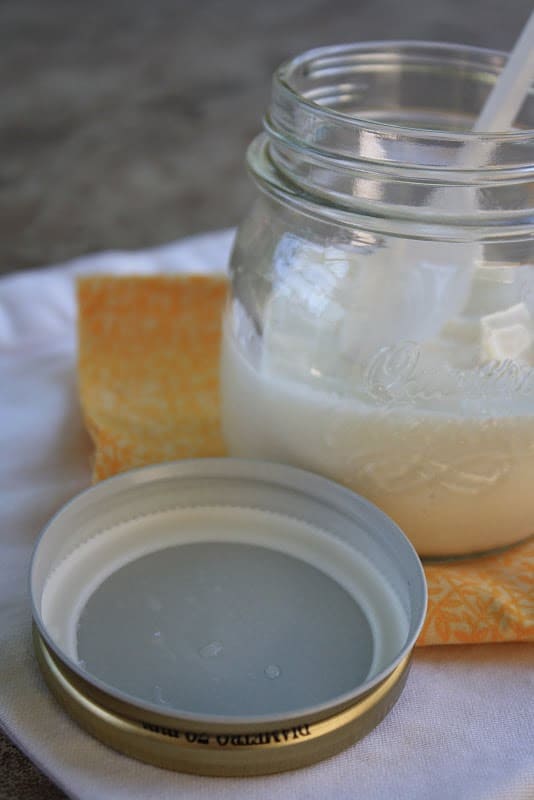
Gum Mastic Pudding
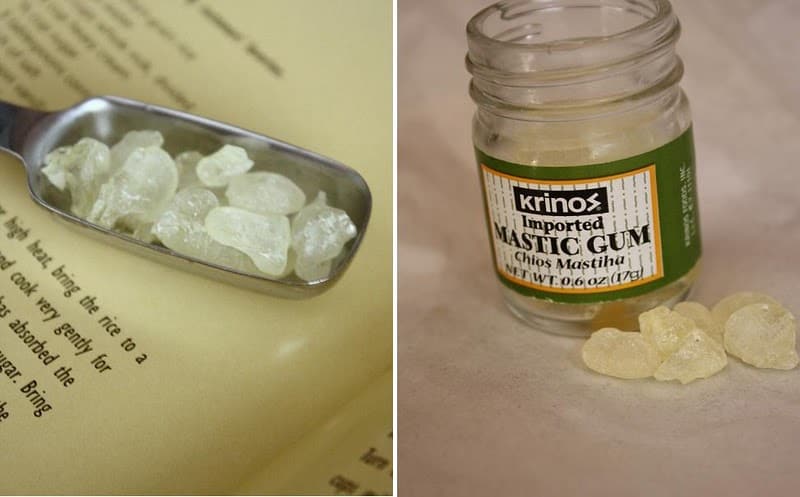
Gum mastic is the aromatic resin collected from wild pistachio trees in Greece, Turkey and neighboring areas. It is used in many Moroccan pastries including dessert brewats. The Turkish use it in their famous muhallebi pudding as do the Egyptians sometimes in muhallabia. I first made my pudding muhallebi-style with cornstarch and it didn’t quite rock my socks so I remade the recipe, the way I like to make pudding, using eggs.
Gum mastic can be an acquired taste especially if you’ve never had it before. It is sweet, somewhat musky with a hint of anise flavor. It is quite intense and usually used in small quantities so it doesn’t overpower food. In Arabic, it is called mestikah or meska (horra), which literally means gum and is perfectly chewable as a substitute for chewing gum.
I love gum mastic. I like to hold it in my hands like jewels, admire it like diamonds. I like to smell it. It is quite unique. If you don’t like it the first time, give it a second chance. It will grow on you.
Gum Mastic Pudding
Heavily adapted from The Sultan’s Kitchen
4 servings
1 tablespoon gum mastic
1 1/2 cups heavy whipping cream
1 cup whole milk
1/3 cup brown sugar
1 tablespoon honey
1/4 teaspoon salt
4 egg yolks
Preheat the oven to 300 degrees Fahrenheit. Place four ramekins or jars in a baking pan.
Place the mastic in a cheesecloth and tie the end to make a bag. Place the cream, milk and mastic bag in a medium saucepan over medium heat and let simmer for about 10minutes. Discard the mastic. Stir in the sugar, honey and salt.
Whisk the egg yolks in a large bowl. Slowly add the cream and milk mixture to the eggs, whisking constantly. Strain the mixture through a fine mesh sieve.
Divide the mixture among the ramekins. Fill the baking pan with hot water until it comes halfway up the ramekins.
Bake for 50-60 minutes. Take the ramekins out of the baking pan and cool at room temperature. Cover the ramekins with plastic wrap and refrigerate.
Sprinkle with cinnamon before serving.
Similar Posts:
Blancmange Recipe
Maple Pots de Crème


rss feed
email
twitter
facebook
pinterest
Sanjeeta kk — 05/02/2011 @ 11:21 am
This food ingredients is new to me, but have something similar here in India. And we use it for desserts and many forms of baking. We call it Gond/dink. Think this is the same, as both are from the sap of a tree.
Love the dessert, scrumptious.
Bryan — 05/02/2011 @ 12:18 pm
Looks great! I am not familiar with the ingredients either but will be looking for Gum Mastic.
foodwanderings — 05/02/2011 @ 12:32 pm
Mastik in Hebrew is (chewing) gum) as well. I guess it refers to the sap from a tree sort of like the maple syrup. Didn't know there is a use for the pistachio tree as well. Learning something new every day:).
Jamie — 05/02/2011 @ 4:22 pm
Mastic fascinates me since I see it used to flavor foods on so many Greek blogs. But the pudding sounds fabulous! This is something I would love to try!
MissCakeBaker — 05/02/2011 @ 7:23 pm
I don't know this ingredient but it's great to learn something new. Your photography is lovely.
Ilke — 05/03/2011 @ 10:02 am
:) I love gum mastic and the pudding.The smell makes it all tasty. They know started adding it to Turkish coffee in Turkey!
A friend of mine wants me to order this book in large quantities to sell in our Turkish Festival. Do you think it is worthwhile?
Joanne — 05/03/2011 @ 11:45 am
I've seen gum mastic at a local spice shop here but I've never known what to do with it so I've never bought it! I adore pudding, so I'm sure this would be the perfect recipe for me to try!
Velva — 05/03/2011 @ 3:04 pm
I am not familiar with gum mastic so this was very informative.
As always, awesome post.
Velva
Nisrine Merzouki — 05/04/2011 @ 12:34 am
Ilke, it has some interesting recipes as well as beautiful photos.
Magic of Spice — 05/06/2011 @ 8:58 pm
I have never tried gum mastic but it sounds wonderful, as well as does your pudding. Lovely recipe :)
Artemis — 06/01/2011 @ 10:19 pm
Hi! I was delighted to find your blog and this post! Gum mastic is formally referred to as "Chios Mastiha" as it has a Protected Designation of Origin from the EU. This means Mastiha only comes from the island of Chios in Greece. This amazing resin has been used as a culinary spice for centuries throughout the Mediterranean and Middle East. It was the first natural chewing gum known to man so it makes sense that in many languages "gum" is a form of the word Mastiha, as is to "masticate". Beyond it's flavor and use as a gum, Chios Mastiha is antibacterial, antioxidant, and anti-inflammatory with a wide range of therapeutic uses! Its trade and cultivation are regulated and protected by a Cooperative of Growers meaning it is fair-trade as well as a renewable, sustainable resource. The Cooperative created mastihashops, lifestyle boutiques with all things Mastiha – with their seal of highest quality, plus many other natural products. There is a store right here in NYC!
Those of you who are interested in finding the resin and looking up more info and recipes, look here: http://www.mastihashopny.com.